Perpetual Pneumonia–Structural Unemployment and Functional Illiteracy in Detroit
Perpetual Pneumonia–Structural Unemployment and Functional Illiteracy in Detroit
Jesse D. Sutton
24 April 2012
WSU – ECO 5800–001
Introduction
The unemployment rate for the United States is 8.2 percent, down from 9.6 percent last year. The unemployment rate for Michigan is 8.8 percent, down from 10.7 percent last year. It is rather common for a state to lag a fraction or so behind the national rate and in many cases for a city to lag behind the state rate by a few points. In contrast, Detroit’s unemployment rate is a colossal 17.8 percent—more than double the state’s unemployment rate (“Employment & Unemployment”). Detroit’s unemployment rate has only decreased by one point over the past year. This would suggest that Detroit is not recovering from the recession at the same rate as the rest of the state or the rest of the nation. That would seem reasonable if applied to this adage. “When the country has a cold, Michigan has the flu.” To this I add… “When Michigan has the flu, Detroit has pneumonia.” So, how well does the country need to be for Detroit to just have a cold? Some reports have Detroit’s U-6 (real) unemployment rate at nearly 50 percent (“Huffington Post”). This means that nearly every other person that you meet in Detroit are unemployed. Michigan’s U-6 unemployment rate is 20.3 percent (“mLive.com”). This would suggest that if Michigan achieved full employment, Detroit would still have a U-6 unemployment rate of 30 percent. The reason for this is that much of the Detroit workforce suffers from structural unemployment. Structural unemployment is the mismatch between the demand in the labor market and the skill set of the available workforce. The skill set of the Detroit workforce is largely manufacturing. When technological advances eliminate manufacturing jobs, structural unemployment is the result. This is why perceivably, the country and the state can recover from this recession, but unemployment in Detroit would remain high. In this essay, I will discuss some factors that contribute to structural unemployment, along with possible solutions.
Development
This pneumonia called structural unemployment is prevalent in the movie 8-Mile. Many see the movie as a struggle to win a rap battle but the b-story deals with economic conditions in Detroit. The character B-Rabbit lives with his unemployed mother. She is not collecting unemployment so she would be represented in Detroit’s hidden unemployment statistics. B-Rabbit who works at the New Detroit Stamping plant is a part-time employee who wants more hours. He would also be counted in the hidden unemployment statistics as underemployed. The character B-Rabbit is loosely based on rapper Eminem’s life story and we know that Eminem dropped out of high school so it is safe to assume that B-Rabbit did not graduate. While at work, B-Rabbit decides to skip out and competes in a rap battle. Though he wins the battle and gets his deserved respect, he goes back to work to finish his shift. The question is what happened to B-Rabbit the next day? B-Rabbit’s untold story most likely reflects a large percent of the unemployed and underemployed population in Detroit. That story is that he went back to work and continued to press out bumpers at the stamping plant. Labor processes at the plant were automated or jobs were outsourced to another country (“World Socialist Web”). Either way B-Rabbit was terminated due to some form of downsizing. This process has played out thousands of times in the real world over the past 40 years. Improvements in technology have been a benefit and a disadvantage to the Michigan economy. These improvements have shifted the demand from manual labor to highly skilled knowledge based jobs. Unfortunately, the B-Rabbits of Detroit does not have the education necessary to fill these new jobs.
The main symptom of this pneumonia called structural unemployment is Detroit’s literacy rate. Nearly 50 percent of adults (more than 200,000 people) in Detroit are functionally illiterate (“Detroit Regional Workforce Fund”). This too means that every other adult that you meet in Detroit can only read and write on the most basic level. Half of these functionally illiterate people have a high school diploma; suggesting that the problem cannot be solely attributed to high school completion. In Oakland and Macomb counties, functional illiteracy is at 13 percent. The municipality breakdown in the region rivals Detroit: Southfield 24 percent, Warren 17 percent, Inkster 34 percent and Pontiac 34 percent (“National Center For Education Statistics”). Functionally illiterate people have problems reading job advertisements, completing job application or writing resumes. This contributes to the number of discourages workers that decides to stop looking for employment.
Individuals that demonstrate a higher level of literacy are more likely to be employed. As literacy levels increase, weekly earnings increase (Jessup). As weekly earning increase, stimulus through a cycle of spending between households and firms moves the economy (Mankiw). Conversely, considering that a vast number of functionally illiterate people live in Detroit, many of these people are doing just fine. Many adults with limited skills are high earning managers or professionals that work in a field that they are experienced in (Jessup). These people don’t have to face the reality of their literacy until that job goes away. This produces a false sense of security in the workforce. Although there are many people who are managing without formal education past high school, this will be their major problem if they ever become unemployed.
The current school system is not producing high school graduates that are capable of meeting the needs of 21st century employers. This is contributing to Detroit’s illiteracy rate. In the past, someone may have been able to work in the manufacturing industry with less than a high school education and make a good living. B-Rabbit represents my grandfather who worked for Ford Motor Company for 45 years without a high school education. My grandfather retired in the 1980s. He was fortunate enough to complete an entire career without being downsized due to out sourcing or technological improvements to the Rouge Factory. By the same token, he was unfortunate; in that he retired from Ford Motor Company with the same education level that he had when he started there at 15-years-old. Today, technological advances have changed the qualifications necessary to get a job in the manufacturing industry. The education system has not kept up with these demands. The most recent attempt to overhaul the public school system was the No Child Left Behind Act of 2001. This Act was supposed to improve the basic skills of elementary and secondary education students (“NCLB2001”). The effectiveness of this program is of much controversy. Students that have been a part of the No Child Left Behind system are now college age. Studies are underway to measure the effectiveness of the program. One indicator of its effectiveness was clear in an early April 2012 news report. Fifty students walked out of Fredrick Douglas Academy because they felt they were not getting an adequate education (“Lang”). Reportedly, one of these students received a passing grade for just showing up to class on test day. Another student was interviewed and his English skills were well beyond so-called Ebonics. These students represent a portion of the functionally illiterate people that we meet every day. When these people speak you mentally translate what they said because you “know what they mean.” One of the Fredrick Douglas Academy students stated that it was too late for them, but they were protesting to help make conditions better for the next class. They were all suspended for their action and when they graduate, they will be counted among the population of Detroit’s functionally illiterate.
One marketplace solution for structural unemployment is the stimulate demand through retail spending. Demand in the marketplace creates jobs. Growing these jobs through rebuilding Detroit’s central business districts is a short-term solution to Detroit’s unemployment rate. In the early 1900s, the retail industry in Detroit grew along with the automobile industry. The population that migrated to Detroit for manufacturing jobs found their shopping needs met by a merchant named Joseph L. Hudson. During the same time that Henry Ford changed the manufacturing world, J. L. Hudson changed the retail world. In 1911, Hudson’s Department Store on Woodward Avenue with a vision that it would become the heart of Detroit (“Detroit News”). Though he died a year after it’s opening, his nephews took over the business and kept up the customer pleasing traditions of the founder. Over the next 40 years, Hudson’s became a giant of retail due to the company’s “more and better” philosophy.
In 1954, Hudson’s opened the world’s first shopping center, Northland Mall, in Southfield, Michigan. The idea was to provide retail services to the growing suburbs. This idea backfired on the main store. The suburban shopper no longer needed to come to Downtown Detroit for their retail needs. Other malls opened in the suburbs modeled after Northland. These mall openings helped facilitate Detroit’s population loss to suburban communities. This population loss called “white flight” was escalated due to the 12th Street Riots in 1967.
In 1970, the project to build the Renaissance Center was launched to revive the Detroit economy as part of the larger “Bridge To Bridge” project (Detroit News). The Renaissance Center Project was wildly successful generating over one billion dollars in economic activity after opening. Retail shops were available inside the Renaissance Center complex. This “city within a city” concept did not foster the long-term growth of retail establishments along the east riverfront as planned. Additionally, this “city within a city” concept was copied in the suburbs with the construction of the Southfield Town Center a few years later. This further facilitated “white flight” and created new central business districts in Southfield. In what seemed to be a final effort to stimulate the Downtown Detroit retail district, the Republican National Convention was held at Joe Louis Arena in 1980. This was a boon for economic activity in the central business district. However, when then California Governor Ronald Reagan left with the republican nomination, retail goods and services appeared to leave with him. Hudson’s main store closed in 1983. They became victims of their own creation (Northland Mall). The retail establishments in the surrounding areas began closing thereafter.
In 1984, the Detroit Tigers went to the World Series. By then, retail stores in Downtown Detroit were mostly closed. The crown jewel of Detroit, the Book Cadillac Hotel, closed after the Tigers won the World Series. This event was emblematic of the decline of Detroit’s retail economy in the central business district. In the late 1980s, former Mayor Coleman Young proposed a project for a new super mall in Downtown Detroit to rebuild retail economic activity. Decision makers did not view this to be a successful endeavor and the plan was abandoned. Downtown Detroit has not had a vibrant retail district since the height of the success of Hudson’s Department store in the 1950s and 1960s. The effort to bring retail back to Downtown Detroit continued with Mayor Young’s successor Dennis Archer.
In 1996, Michigan voters approved a referendum to bring casinos gambling to Detroit (“Michigan In Brief”). The Archer administration scrambled to assemble the land parcels to create a casino/retail district on the Detroit Riverfront. By 2001, that effort failed and the task went to Mayor Archer’s successor Kwame Kilpatrick. Due to conflicts with Riverfront landowners and a sense of urgency to have these establishments built by the time Detroit hosted the 2006 Super Bowl; a deal was brokered to have the permanent casinos built on their current temporary sites. This deal also saw the plans reduced from 800 to 400 room hotels. MGM Grand Casino was allowed to move but the permanent site was less than half mile from the temporary site (though still not on the riverfront.) This same deal allowed Peter Karmonos to scale back the number of buildings to be built for the new Compuware World Headquarters at the Campus Martius location. These concessions effectively killed that economic stimulus through developed retail establishments in an organized shopping district on the riverfront.
The casino industry more so than any other industry is in the business of retaining every dollar from their customers that they possibly can. Casino economics are known to destroy urban areas. This is part of the reason opening new casinos is such an arduous process. Therefore, the risk of having casinos in urban areas should produce a long-term benefit for that risk. The long-term benefit of having casinos in Detroit should have been realized by the development of retail shops along main thoroughfares that attract walking traffic. However, the casino deal that was renegotiated in 2002 broke the first three rules of real estate (location, location, location). This is evidenced by the lack of retail development around their current locations (except for Greektown Casino that was built in a pre-existing retail district). The casinos are content with this situation because they are not interested in competing with any entities outside of their four walls. Motor City Casino was built across the street from Carl’s Chop House and denied that they would have any negative effect on Carl’s business. Motor City argued that Carl’s legendary reputation would cause the casino to lose customer in their restaurants (MacDonald). Carl’s Chop House, who previously had no competition at that location, was now in direct competition with the gaming industry. Prior to Motor City Casino opening at Grand River & The Lodge, there were no other businesses there except for Carl’s Chop House. After the casino opened, Carl’s did not have the benefit of retail attractions that facilitated walking traffic that could patronize his restaurant. He had to compete with the restaurants inside of the casino. After losing over one million dollars in 2008 alone, Carl’s closed for remodeling and never reopened (“Detroiturbex.com”). The Detroit casino industry has employed a great deal of Detroiter’s however, employment and growth through local entrepreneurship has not been realized through the failure to create a dynamic agglomeration economy through this casino deal. Although this opportunity has passed, there are still favorable circumstances where Detroit can receive treatment through retail stimuli.
The effort to bring new retail outlets to Detroit will not be successful without a population base to support it. People will not migrate to a place that doesn’t have retail establishments to provide for their needs. This presents the problem of the chicken and the egg. Which came first? This argument is avoided altogether with what’s being called “The Big Bang” approach. “The Big Bang” approach is a plan where Detroit’s population and retail establishments, grow together; and in a short period (“Crain’s Detroit Business”). Entrepreneur Dan Gilbert spearheads this project and has purchased several buildings in Downtown Detroit for development. These purchases have initiated a number of offers from retailers that are ready to develop these buildings. Gilbert is holding back on these offers until the project can be launched to its maximum effect. As part of “The Big Bang,” Gilbert has moved his Quicken Loans company from Livonia; and by the end of 2012 will have moved over 5400 employees into Downtown Detroit. This follows Peter Karmanos decision to move his Compuware headquarters and over 4000 employees from Farmington Hills to Downtown Detroit in 2003. “The Big Bang” is a short-term approach to bring retail and people in the same place at the same time however–this plan is missing the critical element of providing jobs that match the skill sets of the available workforce in Detroit.
The Great Lakes Global Freight Gateway Project addresses a critical missing piece to “The Big Bang.” The industrial Midwest has been on a decline for the past four decades. Manufacturing jobs have left due to outsourcing or advances in technology. This exodus has left Southeastern Michigan with buildings, land, and other manufacturing infrastructure being unused. The Great Lakes Global Freight Gateway Project is a program that will use these vacant assets to create an inland port in Detroit, to promote global trade from the manufacturing Midwest to worldwide markets (“Building Consensus for Michigan’s Integrated Global Freight Hub”). Detroit has been a manufacturing city for more than 150 years. From railroads, to the auto industry, the citizenry of Detroit have become accustomed to labor based jobs and not knowledge based jobs. This blue-collar work ethic has been passed down over the ages and Detroit still has a workforce that is ready and willing to perform demanding manual labor for a decent wage. Unfortunately, this is the viral root of the pneumonia called structural unemployment. Nevertheless, The Great Lakes Global Freight Gateway Project will bring 200,000 new jobs that match the skill set of the available workforce in Detroit. This is only a short-term remedy for Detroit’s structural unemployment woes. The Great Lakes Global Freight Gateway Project will take advantage of the current factors of production that are readily available in Detroit. This project coupled with the “Big Bang” project addresses the immediate needs of both industry and labor in Detroit. These are short-term remedies. Detroit’s long-term cure for this pneumonia called structural unemployment is education reform.
Summary / Conclusion
The population of Detroit is 50 percent unemployed and 50 percent functionally illiterate. The unemployment rate is a function of the literacy rate. Therefore, improving education in Detroit will contribute to lowering the unemployment rate. This is a long-term solution. The No Child Left Behind generation of students is just entering the workforce. Though it is speculated that The No Child Left Behind act has not worked, their contributions to the economy cannot be measured for decades. The same can be said for any newly initiated education reform. Therefore, education reform should be pursued as one part of a two-fold strategy to reduce unemployment in Detroit. The second part is to grow Detroit’s economy using the skill sets of the available workforce. The Great Lakes Global Freight Gateway Projects will bring 200,000 jobs to the region and use the available infrastructure and unemployed industrial workforce that already exist in the region. The “Big Bang” project is set to stimulate population growth through the development of a retail district that has not been seen since the height of Hudson’s success. These two projects use the same approaches and largely the same infrastructure that lead to Detroit’s growth in the early 1900s. It worked before and with a focus on the long-term needs of Detroit’s economy– and it will work again.
References
“Addressing Detroit’s Basic Skills Crisis.” Detroit Regional Workforce Fund. 2010: n. page. Print.
“Adult Literacy in America.” National Center For Education Statistics. 04 2002: n. page. Web. 22 Apr. 2012. <http://nces.ed.gov/pubs93/93275.pdf>.
Brandon Jessup. Forward Conversations: Detroit Illiteracy. 2010. Video. Michigan Forward, Detroit. Web. 22 Apr 2012. <www.youtube.com/watch?v=_xLxr5AIEVA>.
“Carl’s Chop House.” Detroiturbex.com. web. 22 Apr. 2012. <detroiturbex.com content=”” downtown=”” <span=”” class=”hiddenSpellError” pre=””>carls/carls.html>.
“Casinos and Other Legal Gambling.” Michigan In Brief. Council of Michigan Foundations, 01 Apr 2002. Web. 23 Apr 2012. edition07/Chapter5/CasinosGamb.htm>.
“Dan Gilbert’s “Big Bang Theory for Detroit Development.” Crain’s Detroit Business. 07 03 2012: n. page. Web. 22 Apr. 2012. http://www.crainsdetroit.com/article/20120307/STAFFBLOG08/120309905/8216-big-bang-theory-for-detroit-development>.
“Detroit’s Unemployment Rate Is Nearly 50%, According to the Detroit News.” Huffington Post. 18-03-2010. web. <www.huffingtonpost.com/2009/12/16/detroitsunemployment-rat.html>.
Ed.Gov. Us Department of Education. No Child Left Behind Act of 2001. Web. <www2.ed.gov policy=”” <span=”” class=”hiddenSpellError” pre=””>elsec/leg/esea02/index.html>.
“The Engineering Society of Detroit Institute.” Building Consensus for Michigan Integrated Global Freight Hub. 10-03-2011. Web. 22-Apr-2012. <www.esdinstitute.net/transportation/docs/ESDI-GFH-Web.pdf>.
“General Motors closes Buick City Complex in Flint Michigan.” World Socialist Web. 2 07 1999: n. page. Print. <http://wsws.org/articles/1999/jul1999/auto-j02.shtml>.
“How J.L. Hudson changed the way we shop.” Detroit News. 17 03 2000: n. page. Web. 22 Apr. 2012. <http://apps.detnews.com/apps/history/index.php?id=29>.
Lang, Amy, perf. “Seniors at Detroit’s Frederick Douglass Academy Walk Out in Protest.” Fox 2 News. Fox Broadcasting Company: WJBK, Detroit, 29 March 2012. Radio. .
MacDonald, Christine. “Carl’s may go from strip steaks to strippers.” Detroit News. 23 01 2008: n. page. Print. <www.detroitmemories.com <span=”” class=”hiddenSpellError” pre=””>newsfromhome/carls-may-go>.
Mankiw, Greg. Principles of Microeconomics. 5th. 2008. Print.
“Michigan: History: How the Renaissance Center changed the landscape of Detroit.” Detroit News. 29 09 2001: n. page. Web. 23 Apr. 2012. <apps.detnews.com/apps/history/index.php?id=122>.
“Michigan’s ‘real’ unemployment rate is 20.3 percent.” mLive.com. 13-06-2011. Web. <www.mlive.com/jobs/index.ssf/2011/06/michigans_real_unemployment>
United States of America. Bureau of Labor Statistics. Employment & Unemployment. 2012. Web. <www.bls.gov>.
The Great Lakes Gateway Project: Detroit—The Manu City
The Great Lakes Gateway Project: Detroit—The Manu City
Jesse D. Sutton
29 March 2012
WSU – ECO 5800–001
Introduction
The Great Lakes Global Freight Gateway (GLGFG) Project is an initiative that seeks to transform the Southeastern Michigan and Southwestern Ontario region into a multimodal transshipment hub. This hub will be where goods are moved through the Port of Halifax, loaded on the new Maersk Triple-E container ships, and shipped to worldwide markets. The Port of Halifax is now the only deep-water port that can accommodate these post-panamax container ships. These Triple-E ships can move up to 18,000 containers and, due to the economies of scale, reduce the shipping cost per container; thereby reducing cost to manufactures (GLFGr4, pg. 4). Detroit is currently the best-situated city for repositioning its main economic engine to transcontinental shipping. The location on an international border and the system of rail lines and roadways in the region, are the assets that make this opportunity possible. That is the broad view of the project, but many people want to know a more narrow scope of the project. They want to know the local impact of the project. This essay will address the local angle by illustrating how the decline of the automobile industry has placed this region in a position for revival as a transshipment hub. Also, this essay will illustrate how economic activity from The Great Lakes Global Freight Gateway Project can regenerate local real estate markets.
Development
Shipping goods through Detroit to the Port of Halifax provides the opportunity to use vacated industrial centers by repurposing these facilities for transshipment and manufacturing. Detroit as a transshipment hub provides a distribution system for goods to move to worldwide markets. Many manufacturers have failed due to a lack of an adequate distribution system (UEA12, pg. 65). Distribution and manufacturing goes hand-and-hand. This is the strength of Detroit’s industrial centers. The automobile industry has benefited from these strengths but also contributed to the decline in Midwest manufacturing due to outsourcing. This is one reason Detroit—“The Motor City” has been on a steady decline for more than 50 years, and part of this decline is because of the failure to realize that this is not the “Motor” city. The automobile industry had benefited from the “Motor City” moniker for nearly 100 years. The Great Lakes Global Freight Gateway Project provides an opportunity to convert the assets and resources for the economic benefit of the manufacturing Midwest. The same conversion happened during World War II when “The Motor City” converted to the “Arsenal of Defense” (UEA10, pg. 48). It is now time to convert from Detroit—“The Motor City” to Detroit—“The Manu City.”
Long before Detroit was known for automobile manufacturing, this region was the railroad manufacturing capital of the world (UEA11, pg. 56). The workers that migrated, lived and worked in Detroit more than 150 years ago had skills that they were able to transfer into the automobile industry. As the automobile industry grew, Detroit became known as “The Motor City” however, it was and still is… a manufacturing city. By the 1950s, the automobile industry had emerged from the war economy with a 90% share of the worldwide automotive market (UEA10, pg. 48). General Motors was a dominant force in that market. A group of GM stockholders attempted to create a consolidated voting block by combining their shares. These moves within the company were to leverage generational advantages and transfer wealth and employment opportunities to a few well-connected stockholders (OGM, 0:50/1:10). Unfortunately, this hoarded wealth became worthless because of the GM bankruptcy of 2008 (UEA21, pg. 87). This is an example of how the automobile industry allowed itself to be cannibalized by its leadership and investors. The Great Lakes Global Freight Gateway Projects seeks to create a mutual benefit from this history of pitfalls by collaborating with private and public stakeholders and bringing manufacturing and transshipment jobs back to the Midwest region.
Rent and transportation cost are the lowest when the real estate being used is at the optimal locations for railhead and expressway access (TC, 0:00/3:45). Detroit’s industrial centers are already at these optimal locations. Containerized goods need to be moved quickly through the shipping process to gain the cost saving advantages of being produced near a multimodal-shipping hub. Detroit—“The Manu City” offers industrial centers that are suitable for manufacturing and transshipment; with access to interstate highways and main line rail service to the Port of Halifax. Detroit’s multimodal industrial centers were once used to move auto parts around the world. This allowed the automobile industry to grow. Conversely, many businesses died due to a lack of a distribution system and the ability to produce goods on economies of scale (UEA12, pg. 65). The worldwide distribution from the Midwest to markets abroad and the economies of scale of shipping through the Port of Halifax, will allow other manufacturing businesses to grow while keep rent and transportation cost low.
Low rent and low transportation cost are a concern for the 200,000 employees that will be needed to work in these new jobs. This job growth will create a demand for affordable housing (Mc10B, pg. 184). The demand can be met by selling, renting and by real estate development. The good news is that real estate development can be done cheaper in this post mortgage bubble economy. Detroit has lost population to job opportunities elsewhere. The decline in population has left more than 30,000 vacant houses available in the housing market (RPS, pg. 19). These vacant houses have contributed to declining home values (Mc9C, pg. 168). The financial crisis of 2008 has also contributed to a decline in home values. Mortgages that were written for groups of people who could not afford the loans are now in default (UEA8, pg. 38). Deregulation of the banking industry provided for questionable financial instruments to be created (LEC, pg. 3). These financial instruments were bundled with mortgages and traded on the New York Stock Exchange. In 2006, housing prices decreased and many people found that their mortgages were more that the house was worth (Mc9E, pg. 175). Many of these houses went into default or were foreclosed upon. Although many homeowners were financially devastated during this financial crisis, the result is a housing market with affordable home values. This is one reason stakeholders in The Great Lakes Global Freight Gateway Project should feel a sense of urgency to act now. Real estate developers have already made purchases in Midtown and Downtown Detroit. These developers have decided that the risk is worth the investment (Mc13D, pg. 250–253). These development projects are not far from the industrial areas where the job growth is projected. For that reason rent may be higher than in the neighborhoods (Mc10F, pg. 191–192). However, real estate development could take a several years due to the complexity of the various stages in the development process (Mc13B, pg. 245–248).
There are arrays of housing programs to keep home prices affordable (Mc11C, pg. 219). Various economic reasons may not make it feasible for everyone to become a homeowner so rental units need to be available and affordable. Approximately 34% to 45% of all housing are rental units (Mc10E, pg. 188). Rent control policy keeps landlords from inflating rent to unaffordable levels (Mc11F, pg. 228). This mix of freehold and non-freehold housing options are what makes Detroit the right place at the right time for The Great Lakes Global Freight Gateway Project (RET1, 5:25).
As The Great Lakes Global Freight Gateway Project reaches capacity, expansion of commercial real estate as well as expansion of affordable housing will be necessary to accommodate the arrival of new workers to the region. It may even be necessary for residential land to be rezoned for commercial use. The transshipment industry has room for a tremendous amount of growth and the real estate redevelopment process can mature along with it.
Summary / Conclusion
Detroit—“The Motor City,” has been on a decline for more than four decades. Past being prologue, what have we learned? We have learned that Detroit grows as part of a solid manufacturing industry. This has been the case from the early days of the railroad industry and has continued through to today. We have learned that the infrastructure is available to support Detroit as a manufacturing and transshipment hub. We also know that Detroit has a workforce that can support the transshipment industry and when called to do so, Detroit can switch gears and produce the goods that the world needs. The Great Lakes Global Freight Gateway is the Project that can take advantage of the assets that are available to produce sustainable jobs and produce billions of dollars of economic activity in the region. We know that this economic activity will contribute to real estate development and improve housing markets. The decline of this region did not happen overnight and it will not be fixed overnight. However, The Great Lakes Global Freight Gateway is the right project at the right time to revitalize Detroit—“The Manu City.”
References
McDonald, J. F., & McMillen, D. P. (2011). Urban Economics and Real Estate: Theory and Policy. (2nd ed., p. 168, 175, 184, 188, 191–192, 219, 228, 245–248, 250–253). Danvers, MA: John Wiley & Sons.
Sase, J. F. (2009). Urban economic anatomy: Upheaval & Change in Detroit. (p. 38, 48, 56, 65, 87). Lathrup Village, MI: SASE Associates.
Sase, J. F. (Producer). (2010). Real Estate Agent test Cram 1. [Web Video]. Retrieved from http://www.youtube.com/user/urbanecondetroit
Sase, J. F. (Producer). (2011). OGM: Legends of Detroit—Old General Motors. [Web Video]. Retrieved from http://www.youtube.com/user/urbanecondetroit
Sase, J. F. (Producer). (2011). TC: Rent+Transportation=Total Cost. [Web Video]. Retrieved from http://www.youtube.com/user/urbanecondetroit
Detroit Office of Foreclosure Prevention and Response, Data Driven Detroit (D3), Community Legal Resources, University of Michigan — Edward Ginsberg Center and Living Cities, eds. Detroit Residential Parcel Survey. Detroit, MI: 2009. (p. 19). Print.
Sase, J. F., and Gerard Senick. Another Mortgage Tsunami? “Let Them Eat Cake” (Part Two). 2010. Print.
Sase, J. F., and Gerard Senick. “Legal News Expert Witness column.” The Great Lakes Freight Gateway: $11 Billion in New Economic Activity and 150,000 New Jobs. November 2011. Print.
The Great Lakes Global Freight Gateway Project: Detroit to Halifax
The Great Lakes Global Freight Gateway Project: Detroit to Halifax
Jesse D. Sutton
22 February 2012
WSU – ECO 5800-001
Introduction
The industrial Midwest has been on a decline for the past four decades. Many companies have left Southeastern Michigan to produce goods elsewhere. When these companies moved their operations to other cities, much of the population in the region moved also. These people left to seek job opportunities in other urban areas. When industries and people leave an area, the infrastructure is often left behind. Buildings, land, and infrastructure remain vacant in Detroit because of this exodus from the region. The framework of the region largely resembles the period before Detroit was incorporated as a city, aside from the infrastructure that has been left behind. The availability of existing industrial centers coupled with the new capabilities of the Halifax Port in Nova Scotia, Canada, offers Detroit the opportunity to use this infrastructure to transform the region into an international shipping hub. The Great Lakes Global Freight Gateway Project is a program that will use these vacant assets to create an inland port in Detroit, and to promote global trade from the Midwest (GLFG3, 3:33/8:46). This essay is going to show how the Great Lakes Global Freight Gateway Project can restore economic vitality to the region and provide growth opportunities for all stakeholders.
Development
The United States economy has shifted from being predominately manufacturing based to being largely service based. In contrast, Detroit’s economy is still based on manufacturing. Manufacturing jobs have been on a steady decline for more than 40 years. Repositioning Detroit from a manufacturing only industry to a manufacturing and transcontinental shipping industry can open new revenue possibilities for stakeholders in the region.
Detroit’s population peaked in the 1950s with more than two million residences in the region (Mc, Pg. 12). This period of growth contributed to the clustering of various economic activities around manufacturing (Mc, Pg. 66). These clusters of economic activities still exist today, however the population has declined to pre-1920s levels, and the economic growth of the region is stagnant. When manufacturing jobs left the region, large amounts of the population followed. The population that remains are largely from the manufacturing sector and have the necessary skill set to be employed in the shipping industry (Mc, Pg. 44). The Great Lakes Global Freight Gateway Project can promote growth in the region by utilizing the same regional assets that were used for urban growth in the mid 1900s.
Nearly half of the nation was formed between 1790 and 1860. Innovations in the productions of goods and services coupled with the transportation revolution led to rapid urbanization (MC, Pg. 56). In Southeastern Michigan, this urbanization took form in the 50 villages that developed during the pre-civil war years (EV1, 1:00/12:10). These villages were connected through a network of roads (EV2, 1:12/2:30). These roads were the basis for establishing rail lines and industrial centers. By 1926, these villages and towns had been incorporated into the City of Detroit, and the population was nearly one million residences (DGA, 1:00/1:10). The manufacturing industry continued to expand, and contributed to the population doubling in less than 25 years. The rapid growth of the manufacturing industry translates into rapid population growth. This rapid growth can also destroy sectors of the economy.
Creative destruction is the minor pains that one industry suffers because of the greater gains of a replacement industry. The nation has felt the pains of creative destruction, as manufacturing has been displaced by the service industry. Detroit specifically has felt the pains of creative destruction, but with no benefit of an emerging industry. Creative destruction can also be described as the pains that an area feels because of globalization (UEA7, Pg. 33). Detroit feels the pains of creative destruction from globalization as well. Manufacturing job have been outsourced to other countries and the unemployment rate has risen to nearly 10%. There are no industries in Detroit to support the talent pool of workers that are available. In other words, globalization and the service industry have wreaked havoc on the manufacturing based economy of Detroit and the surrounding areas. The benefits of creative destruction have not been realized. The Great Lakes Global Freight Gateway Project will provide the benefits of creative destruction to the region though repurposing of assets and repositioning of the major industry in the region. This repositioning will combine manufacturing and transcontinental shipping from the industrial Midwest, through Detroit and on to The Port of Halifax. From there, goods will be shipped to and from emerging markets in Europe, Africa, India and China.
Detroit is better situated than any other city for repositioning its main economic engine to transcontinental shipping. The location on an international border and the system of rail lines and roadways in the region, are the assets that make this opportunity possible. Industrial centers and rail lines were built along these routes as the transportation revolution provided faster ways to trade goods (DRF1, 1:07/4:47). These roads also became the basis for the interstate highway system in the region (DRF1, 4:24/4:47). The trucking industry uses these highways to move goods to and from manufactures all over the Midwest and Canada. Canada is an integral part of this international effort to bring economic prosperity to the region. Canada’s rail assets offers mail line service through Montreal to The Port of Halifax. Using Detroit to access the Port of Halifax gets goods to and from an international port quicker and cheaper than the Chicago to Norfolk route. The Detroit region is the median location for Midwestern manufacturing inputs and outputs that are bound for worldwide markets (Mc, Pg. 43). At the median location, transportation costs are the lowest for shipping to any point in the supply chain. Rent cost are also reduced by shipping from the median location (Mc, Pg. 86). This reduction in rent cost is because manufacturers do not need to be located in the central business district (Mc, Pg. 92). The Great Lakes Global Freight Gateway will provide manufacturers from the Midwest the opportunity to move products to and from the global marketplace quicker and cheaper. This system of industrial facilities, road and rail access on both sides of the border make the Southeastern Michigan/Southwestern Ontario region a prime location for becoming the transcontinental shipping hub of the Midwest (Mc, Pg. 46).
The region has strong input-output relations that form an agglomeration economy (Mc, Pg. 74). The downtown business district, airports, industrial centers and supporting service industries are centers of economic activity for growth around the repositioning of the city (Mc, Pg. 79). The clustering of these economic activities makes Detroit well suited for a transformation into a global city (Mc, Pg. 71). However, this transformation can only happen by using the infrastructure in its intended role. The role of infrastructure has always been to move freight from place to place (Mc, Pg. 83). To facilitate that role, new bridges and tunnels need to be built to accommodate the increased capacity of rail travel along the route (HD, 3:15/5:36.) The investment is minimum compared to the revenue possibilities of shipping through Detroit to Halifax, as opposed to using the Chicago to Norfolk route. This transformation from manufacturing only to manufacturing and transcontinental shipping can create growth and rival Chicago as one of the largest urban areas in the Midwest (Mc, Pg. 61).
The Port of Halifax is the only port in North America that is now capable of handling the new Maersk Triple E container ships. These ships are built for economies of scale and can transport up to 18,000 shipping containers. Businesses that want to expand into the emerging markets of Europe, Africa, India and Asia have new opportunities by using the Detroit to Halifax shipping route. The Triple E ships allows for parts and finished products to be moved across the world in greater quantity than what is now available.
Summary / Conclusion
The Great Lakes Global Freight Gateway can take advantage of the available underutilized assets in the Detroit region to the benefit of all stakeholders. The growth potential of this project will create economic activity in the region that has not been seen in a half century. The underutilized infrastructure and unemployed industrial workforce presents an opportunity to get this project moving very rapidly. The industrial Midwest has the ability to move more products to and from global markets all while reducing expenses and increasing revenue. Revenue increases stimulates growth in the industry that stimulates population growth in the region. The Port of Halifax has provided an opportunity for the industrial Midwest to capitalize on underused assets. These factors are what make urban area grow. The Great Lakes Global Freight Project is the engine to make this growth possible and will be a boon for all stakeholders.
References
McDonald, J. F., & McMillen, D. P. (2011). Urban Economics and Real Estate: Theory and Policy. (2nd ed., p. 12,66,44,56,43,86,92,46,74,79,71,83,61). Danvers, MA: John Wiley & Sons.
Sase, J. F. (2009). Urban economic anatomy: Upheaval & Change in Detroit. (p. 33). Lathrup Village, MI: SASE Associates.
Sase, J. F. (Producer). (2010). Early Villages That Became Detroit – Part 1. [Web Video]. Retrieved from http://www.youtube.com/user/urbanecondetroit
Sase, J. F. (Producer). (2011). Early Villages That Became Detroit – Part 2. [Web Video]. Retrieved from http://www.youtube.com/user/urbanecondetroit
Sase, J. F. (Producer). (2011). Detroit Growth by Annexation (Study Version). [Web Video]. Retrieved from http://www.youtube.com/user/urbanecondetroit
Sase, J. F. (Producer). (2010). Detroit: Economic Rise, Fall & Rebirth. [Web Video]. Retrieved from http://www.youtube.com/user/urbanecondetroit
Sase, J. F. (Producer). (2011). Halifax to Detroit. [Web Video]. Retrieved from http://www.youtube.com/user/urbanecondetroit
Sase, J. F. (Producer). (2011). Great Lakes Global Freight Gateway. [Web Video]. Retrieved from http://www.youtube.com/user/urbanecondetroit
2010 in review of the Tricky Blog!
The stats helper monkeys at WordPress.com mulled over how this blog did in 2010, and here’s a high level summary of its overall blog health:

The Blog-Health-o-Meter™ reads This blog is doing awesome!.
Crunchy numbers

A helper monkey made this abstract painting, inspired by your stats.
A Boeing 747-400 passenger jet can hold 416 passengers. This blog was viewed about 1,700 times in 2010. That’s about 4 full 747s.
In 2010, there were 43 new posts, not bad for the first year! There were 11 pictures uploaded, taking up a total of 857kb. That’s about a picture per month.
The busiest day of the year was October 25th with 33 views. The most popular post that day was what you wont do….
Where did they come from?
The top referring sites in 2010 were digg.com, cheaptravelstyle.com, slashingtongue.com, en.wordpress.com, and legal5ounds.com.
Some visitors came searching, mostly for trickyd313, trickyd313.wordpress.com, rick snyder, mike cox is corrupt, and celebrity apprentice 3 blog opinions.
Attractions in 2010
These are the posts and pages that got the most views in 2010.
what you wont do… October 2010
The Best Ten O’clock Drama on TV (Sorry Jay, you and Conan come in Second.) February 2010
1 comment
Do you have a robust sex life or a Sexual Addiction? February 2010
4 comments
Random thoughts from watching the Grammy Awards. February 2010
1 comment
President Obama’s Accomplishments in only 2 years
Received in e-mail. Had to repost.
WHAT PRESIDENT OBAMA HAS ACCOMPLISHED IN 2 YEARS…and he continues to accomplish even more!
Things you don’t hear about
Good to know
One question: Why isn’t this being publicized?
|
America’s reasons to be thankful
Received in e-mail. Had to repost.
Had to share with you…made me shed tears of joy and pride.
“Blessed is the man who perseveres under trial, because when he has stood the test, he will receive the crown of life that God has promised to those who love him” James 1:12
Let’s continue to pray for the President of the U.S.A.
America’s Reasons to be Thankful
. . .the “room-lighting” smile:


For the mind that always think:


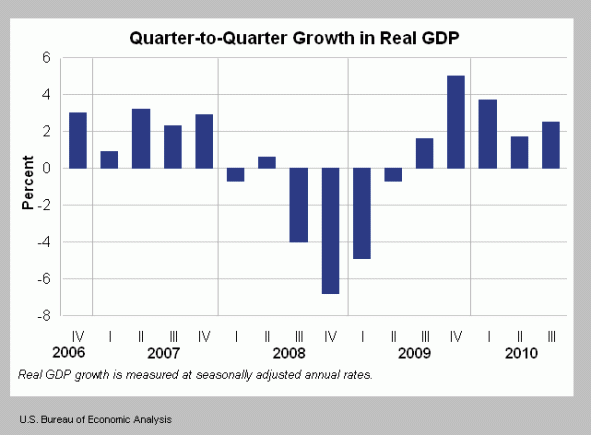
For preventing a second Great Depression:
For the humor:


For bringing the number of women in the Supreme Court to 3.:

For making the White House the “people’s” house:

For 1.1 million jobs created in 2010 alone, more than the entire 8 years of George W.Bush:

For The Penny Ice Creamery in Santa Cruz, California:
For the love of people:


For the love of family:


For America’s First Lady:


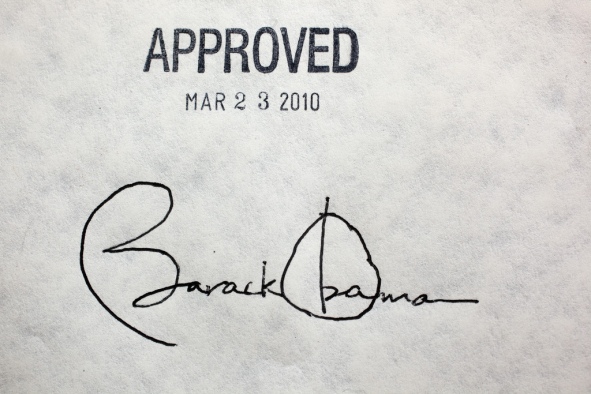
For Health Care reform:
For leaving the past behind:


For the world having respect for America, again:


For quietly and calmly dealing with crisis after crisis, after crisis, after crisis, even if not being responsible for any of them:

*
For being so “cool”:


For being fierce – when need be:


For having the intellect to be curious:

For the capacity to know that you are, as we are, imperfect….

For having the sense to not let it destroy you…

For the capacity to be compassionate:


For being an inspiration to so many:


For saving the auto industry and at least 1.4 million jobs:

For loving the troops:


For understanding the horrible price of war:

For bringing 100,000 men and women back from Iraq:
For facing the most difficult and loneliest job in the world with grace, dignity, honesty and guts in spite of so many “Haters”:


For being, in spite of all the hate, pettiness, racism, corruption and immaturity around, the most progressive and ‘for the people’ president in decades:
And simply for this:

I Know What Chalaza Is, But Does It Really Matter?
I joined the United States Army in 1990 as a cook. I decided to leave active duty ten years later and take my skills to the civilian workforce. When I was on active duty I won many awards in my field. I have received gold and silver medals from various culinary arts competitions and have been a two-time Cook of the Year. My experience in Army food service prepared me for two things; preparation of standard products and management. I later found that my culinary arts skills were less that I thought they were, but at the time I just knew that I was the greatest. I had been involved in competitions that brought creativity into the kitchen. I explained this to the head hunter services, as they shopped my resume around but they all told me that when I go on an interview–DO NOT SAY THAT I WANT TO BE CREATIVE. I did not understand this so I did not follow that advice. I wanted to be creative. I’m a former two-time cook of the year for goodness sake! I quickly found that the sector of food service (management) that I was more suited for was fast casual dining. From an industry stand point, there is no significant difference between fast food and fast casual. They are all dubbed as “food factories” and they all produce standard products. I found that food factories are not going to hire anyone that wants to be “creative.” I had to change my tactics.
I worked for Cracker Barrel, Sinai Grace Hospital and Boston Market at points over the past ten years. These places all have one thing in common–NO CREATIVITY PERIOD! Henry Ford developed ways to mass produce the Model-T; the food service industry has developed ways to crank out the McDLT. I submitted to this. I can do this. I have done this. No problem right? Wrong! These places do not want people who can think on the fly or that can solve problems. They want employees that can do the one or two functions necessary to get the products out. Minimum skills are necessary for these McJobs. The most valuable skill necessary is to be on time for work, to follow specific guidelines and to work fast– very, very fast. I made good money as a Manager in these places but the job was not very rewarding. I can name the five major parts of an egg, but that information was useless at these jobs. My employees could care less about the function of chalaza1.
Long ago, I decide that I did not want to work at any of the automobile plants. My Brother has worked as an Assistant Manager for Chrysler’s North Assembly plant for a several years. We never really talked about what goes on at each others jobs until I hired his wife to work for me at Boston Market. As we talked, we both began to realize that we worked at the same place. All of the issues were the same, just the products were different. It’s sad to say but we joked from time to time about how “stupid2“ some of our employees were. Some of these “stupid” employees actually had the capacity to stand in a puddle of water, pick up bare wire and head for an electrical socket. The problem is that these same “stupid” people could complete a shift of hard work with minimum complaints and maximum efficiency. They were also the proudest of how well and how fast they could do their job. The auto and food industries have made it so that minimum skills and education are necessary to make a living.
The questions ask, Do you think that fast food workers are being set up to be structurally unemployed and the answer is let’s see. In my examples above I have described my dealing with what is called fast casual dining. Fast food and fast casual both require minimum skills to do the job. To make Boston Market sweet potato casserole, place bag in steamer for 20 minutes, open the bag, put product in pan. Oh don’t forget the marshmallows and brown-sugar topping. Dropping fries in some grease, pushing a button and waiting for the timer to go off, takes little skill as well. Good grill cooks can always find jobs in someone’s kitchen. Cashiering at McDonalds has been partly automated. These skills you learn at these types of registers don’t exactly transfer to other cashier jobs that require actually counting money back to a customer. As I remember it 20 years ago a fast food job was the best way to go to get experience counting change back to a customer. Hmmm, times have changed. So I believe that some of these McJobs provide for conditions where unemployment is cyclical but most McJobs provide for structural unemployment. I also feel that they all contribute to maintaining a cycle, where certain groups of people can not get above the poverty level.
1Chalaza is a small white membrane that you see on the side of egg yolk. It serves as an anchor that keep the yolk in the center of the albumen (white.) In culinary arts, specifically pastry making, almost all recipes call for “egg whites minus the chalaza.” Chalaza may be mixed into recipes and unseen until that product dries or is needed to be piped through a pastry bag. This can ruin weeks of work or cause hour of frustration creating your work.
2The “stupid” person example is not and indictment of all fast food workers or all Autoworkers.” The example was just made to describe how an unintelligent person can do very well considering how the automobile industry and the food service industry has simplified the processes to get the desired result.
What I Learned From The Fast Food Industry About Marketing
An early 1900’s American businessman said something to the effect of the following: “In order to become rich, one must find and sell a product that gets consumed in its usage, so that consumers can repeatedly by that product over and over again.” I’m not sure if this quote originated with one of the oil magnates J. Paul Getty, John D. Rockefeller or from industrialist Andrew Carnegie. In fact, I’m pretty sure that I have screwed up the original quote but have captured it’s essence as written here. I first heard this quote while watching a documentary on the history channel some years ago. The point of the saying is that to have continuing wealth, one must sell items such as toilet paper and toothpaste. When this quote was made I don’t think that the author thought of food as that product however, the McDonald’s Company did.
Ray Kroc, founder of the McDonald’s Company–whom was heavily influenced by the Disney Company’s business model–decided to take the concept of that quote one step further. The additional step was to find a target audience, market to that audience, thereby creating a life long fan of the brand. This group that is targeted would become surrogate advertisers and create secondary customers to use these products through repeat business over the years. The group that McDonald’s targets–YOUR KIDS! I was able to learn these skills and tactics when I attended a McDonald’s University management seminar in early 2002. There was a module of instruction called Client for Life and another called Raving Fans (named after the popular book by management expert Ken Blanchard.) In the book and the seminar one learns that providing exceptional customer service and catering to your customers needs, is the best way to create these repeat customers. This in itself is not a bad thing because virtually everyone wants and expects great service when they are paying for it. But there seems to be something else going on within this concept as it applies to the fast food industry enticing kids to use their products.
In the United States, we as Americans attempt to shield children from the influences of sex, drugs, and violence. This is especially true when it comes to the images that we see on movie screens, television screen and broadcast radio. Why is that? It’s because children are very susceptible to the images that are seen and heard in these media formats. While children are protected from negative influences in the media, there is no protection from fast food and other industries that targets our children with the products that they sell. Many of these products are dangerous and contribute to causing various illnesses such as diabetes and obesity. There have been lawsuits filed in attempts to force corporation to not market to children but those attempts have failed leaving Americas kids to be preyed upon by these major corporations.
These corporations have even invaded the last place that you would expect. Americas public school system. Being a life long Detroiter, I know the cash strapped public school system could benefit from an injection of capital from a wealthy contributor. However I am conflicted when it comes to these companies advertising in schools. Do we want our children to have billboards, posters, table tents and other advertising material in a learning environment? I’ve already stated how impressionable these young minds are, so is this additional distraction from the learning process needed? I think not! But the bigger issues is corporate child predators that spend billions of dollars a year on research, and focus groups to better learn how to entice your child, to move toward their products.
As I am writing this paragraph I am watching a commercial for the General Mills corporation’s breakfast cereal line. Boo Berry, Cocoa Puffs, Count Chocula, and Franken Berry are a few products that are being rebranded as containing whole grain–and therefore good for you. Now on is a GEICO commercial. Oh that cute little gecko. Too bad consumers don’t know that GEICO stands for Government Employees Insurance Company. This company and others us these mascots to gain trust among kids. Joe the Camel is ban from ads because of the harmful product it represents but Ronald McDonald is more popular than Mickey Mouse.
The following is a list of some brands that I use. Apple, Chevy, Avery, Lexmark, Pep Boys, Best Buy, Folgers, Starbucks & Red Bull. I use these brands because of the quality or perceived quality of the product. Obviously, many of these companies do not have products that could be targeted toward children but notice that those companies that do, are absent from this list. As a parent those products would still be absent from this list. I would be lying to say that I don’t dine at McDonald’s from time to time. But I do not take my kids there. I attempt to not succumb to the tactics that these corporations use as well as those same tactics used by other industries.
I too am on a quest to become wealthy. The products or services that I offer to the public may fall into the category of a continuously consumed good or service as suggested earlier, however I can not picture myself using these cradle to the grave tactics to shop my wares.
7 kinds of sex
1. —– SOCIAL SECURITY SEX
Two men were talking. So, how’s your sex life?”
“Oh, nothing special. I’m having Social Security sex.”
“Social Security sex?”
“Yeah, you know: I get a little each month, but not enough to live on!”
2. —– LOUD SEX
A wife went in to see a therapist and said, “I’ve got a big problem, doctor. Every time we’re in bed and my husband climaxes, he lets out this ear splitting yell.” “My dear,” the shrink said, “that’s completely natural. I don’t see what the problem is.” “The problem is,” she complained, “It wakes me up!”
3. —– QUIET SEX
Tired of a lifeless sex life, the man came right out and asked his wife during a recent lovemaking, “How come you never tell me when you have an orgasm?” She looked at him casually and replied, “You’re never home!”
4. —– CONFOUNDED SEX
A man was in a terrible accident, and his “manhood” was mangled and torn from his body. His doctor assured him that modern medicine could give him back his manhood, but that his insurance wouldn’t cover the surgery since it was considered cosmetic. The doctor said the cost would be $3,500 for “small,” $6,500 for “medium,” and $14,000 for “large.” The man was sure he would want a medium or large, but the doctor urged him to talk it over with his wife before he made any decision. The man called his wife on the phone and explained their options. The doctor came back into the room, and found the man looking dejected. “Well, what have the two of you decided?” asked the doctor. The man answered, “She’d rather remodel the kitchen”.
5. —— WEDDING ANNIVERSARY SEX
A husband and his wife had a bitter quarrel on the day of their 40th wedding anniversary. The husband yells, “When you die, I’m getting you a headstone That reads: ‘Here Lies My Wife – Cold As Ever.'” “Yeah,” she replies, “When you die, I’m getting you a headstone that reads: Here Lies My Husband – Stiff At Last.’
6. — NO SEX
My husband came home with a tube of K Y jelly and said, “This will make you happy tonight.” He was right. When he went out of the bedroom, I squirted it all over the doorknobs. He couldn’t get back in.
7. —- OLD SEX
One night an 87 yr. old woman came home from bingo to find her 92 yr old husband in bed with another woman. She became violent and ended up pushing him off the balcony of their 20th floor assisted living apartment killing him instantly. Brought before the court on a charge of murder, the judge asked her if she had anything to say in her defense. She began coolly, “Yes, your honor, I figured that at 92, if he could have sex….. he could fly.
what you wont do…
The wife comes come early & finds her husband in their master bedroom making love to a beautiful, sexy young lady! "You unfaithful, disrespectful pig! What are you doing? How dare you do this to me the faithful wife, the mother of your children! I'm leaving this house, I want a divorce!
"The husband, replies "Wait, Wait a minute! Before you leave, at least listen to what happened" "Hummmmm, I don't know, well it'll be the last thing I will hear from you. But make it fast, you unfaithful pig you"
The husband begins to tell his story . . . "While driving home this young lady asks for a ride. I saw her so defenseless that I went ahead and allowed her in my car. I noticed that she was very thin, not well dressed and very dirty. She mentioned that she had not eaten for 3 days.
With great compassion and hurt, I brought her home and warmed up the enchiladas that I made for you last night that you wouldn't eat because you're afraid you'll gain weight; the poor thing, practically devours them. Since she was very dirty I asked her to take a shower.
While she was showering, I noticed her clothes were dirty and full of holes so I threw her clothes away. Since she needed clothes, I gave her the pair of jeans that you have had for a few years, that you can no longer wear because they are too tight on you, I also gave her the blouse that I gave you on our anniversary and you don't wear because
I don't have good taste. I gave her the pullover that my sister gave you for Christmas that you will not wear just to bother my sister and I also gave her the boots that you bought at the expensive boutique that you never wore again after you saw your co-worker wearing the same pair."
The husband continues his story . . . . .
"The young woman was very grateful to me and I walked her to the door. When we got to the door she turned around and with tears coming out of her eyes, she asks me: "Sir, do you have anything else that your wife does not use"
What you won't do another one will!


leave a comment